Fuente oficial: https://viviendabienestar.gob.mx/
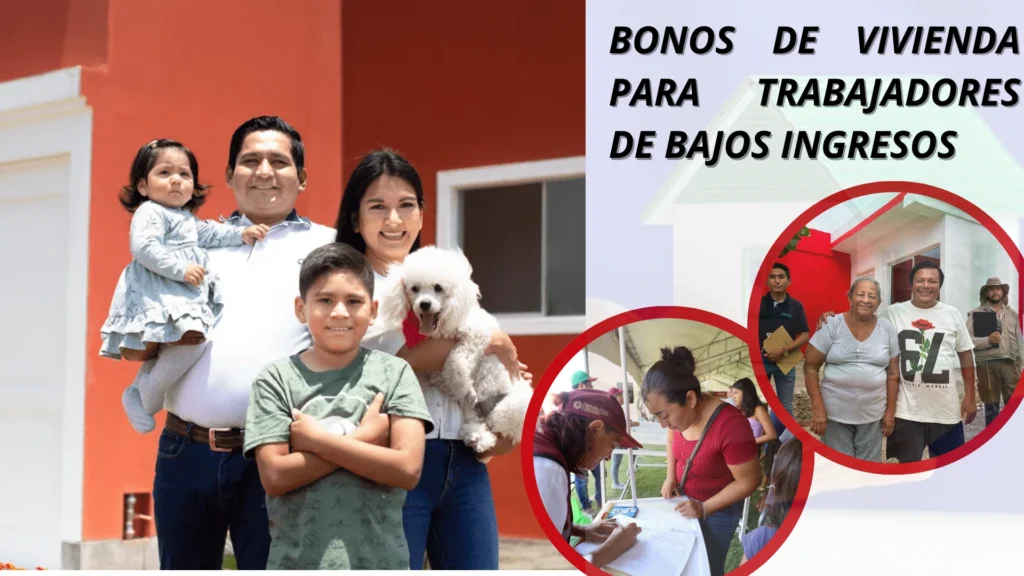
The dream of owning a home is universal, yet for many low-income workers, it can feel out of reach. Navigating the complex landscape of financial aid can be challenging, whether you’re seeking opportunities in the United States or Mexico. Fortunately, both countries offer valuable programs designed to make homeownership a reality. This article delves into crucial housing bonuses, grants, and financial aid, primarily focusing on options available for low-income workers in Mexico.
Understanding Housing Aid in Mexico: A Path to Your Home 🏠
In Mexico, several governmental institutions are dedicated to facilitating access to dignified housing, especially for those with limited resources. These entities work in concert to offer not just credit, but also subsidies and complementary financial aid often referred to as «bonos» or «apoyos.» The primary players are the Instituto del Fondo Nacional de la Vivienda para los Trabajadores (INFONAVIT), the Fondo de la Vivienda del Instituto de Seguridad y Servicios Sociales de los Trabajadores del Estado (Fovissste), and the Comisión Nacional de Vivienda (CONAVI).
Bonos de vivienda
Subsidios federales
Guia para acceder al bono🧋
INFONAVIT: More Than Just a Credit
INFONAVIT is perhaps the most well-known housing institution in Mexico, serving formal sector workers. It operates on a tripartite system involving workers, employers, and the government, managing a housing fund built through employer contributions.
Eligibility and Requirements for INFONAVIT Housing ✅
To qualify for INFONAVIT housing benefits, including potential subsidies, you must be a formal sector worker with an active employment relationship. Your employer must be making regular contributions to your INFONAVIT subcuenta de vivienda. Furthermore, you need to accumulate a minimum number of points, which are calculated based on factors like age, salary, continuous employment, and your employer’s contribution behavior. Importantly, you cannot have an active INFONAVIT credit already.
INFONAVIT’s offerings go beyond simple direct credits. They are often structured to maximize your purchasing power. For instance, INFONAVIT credits can be combined with subsidies from other institutions, effectively acting as a «housing bonus» that reduces the total cost of your home. This co-financing approach is crucial for low-income workers.
Decoding INFONAVIT’s Housing Bonuses and Subsidies 💰
While INFONAVIT does not typically offer standalone «bonuses» in cash, it actively participates in co-financing schemes that function similarly to a bonus by reducing the capital you need to repay. One prime example is the collaboration between INFONAVIT and CONAVI. Through programs like Crédito INFONAVIT + CONAVI, eligible workers can access a direct subsidy from CONAVI, which is then applied to the INFONAVIT credit. This can significantly lower the amount of the loan, making monthly payments more manageable and accelerating equity build-up.
Another important mechanism is Cuenta Infonavit + Crédito Bancario (formerly Apoyo Infonavit). This allows you to use your accumulated savings in your INFONAVIT subcuenta de vivienda as a guarantee for a bank loan. Your employer contributions then go directly to reduce the principal of your bank mortgage. While not a direct bonus, it leverages your savings and contributions to secure a bank loan under favorable terms. Furthermore, INFONAVIT offers various credit types, including those for new or existing homes, land, or even home improvements (like Mejoravit), each designed to meet diverse housing needs.
The benefits are substantial: access to lower interest rates than commercial banks, longer repayment terms, and the invaluable reduction of your housing cost through integrated subsidies. To check your points, pre-qualify, and explore options, visit the official portal: 🌐 www.infonavit.org.mx. It’s your first step toward understanding your personalized housing opportunities.
Fovissste: For Public Sector Workers 🏦
For those employed by the Mexican government at federal, state, or municipal levels, Fovissste is the equivalent of INFONAVIT. It manages a housing fund for public sector workers, offering various credit options to acquire, build, or renovate a home.
Securing Your Home with Fovissste
Eligibility for Fovissste programs hinges on being an active government employee with contributions to the fund. The specific requirements vary by credit type, but generally include a minimum period of contributions and being within the eligible period to apply for a loan. Fovissste offers several types of credits, such as the Traditional Credit (granted via raffle), Alia2Plus (co-financed with a bank), and ConstruYES (for self-construction or improvements).
Similar to INFONAVIT, Fovissste also participates in co-financing models that can incorporate subsidies from CONAVI. This means that a government worker, through their Fovissste credit, might also qualify for a «bono» in the form of a direct subsidy to reduce the total amount of their home purchase. For detailed information and to check your eligibility, visit: 🌐 www.fovissste.gob.mx.
CONAVI: The Key Player in Housing Subsidies 🏠
The Comisión Nacional de Vivienda (CONAVI) plays a crucial role in the Mexican housing ecosystem by specifically focusing on direct housing subsidies. CONAVI’s primary objective is to support families who, due to their low income, cannot access adequate housing through traditional financing alone.
Direct Housing Subsidies Through CONAVI
CONAVI’s subsidies are often the closest thing to a «housing bonus» for low-income workers. These subsidies are not loans; they are non-repayable funds provided by the government to help cover a portion of the cost of acquiring, building, or improving a home. They are designed to complement other forms of financing, such as INFONAVIT or Fovissste credits, or even bank loans for social interest housing.
Eligibility for CONAVI subsidies is primarily based on income. Generally, applicants must have very low incomes, often falling within specific income brackets (e.g., up to 2.8 Unidades de Medida y Actualización, UMA, monthly) and typically not own another property. Priority is often given to vulnerable groups, including single mothers, persons with disabilities, indigenous populations, and residents of rural or marginalized areas. The specific requirements can vary based on the current year’s housing programs and their particular focus.
The application process usually involves working through an authorized housing developer or a financial institution (like INFONAVIT or a bank) that participates in CONAVI’s programs. The benefits are transformative: a significant reduction in the out-of-pocket cost of a home, making homeownership attainable for thousands of families. While exact amounts fluctuate annually, CONAVI subsidies can range from tens of thousands of pesos, effectively covering a substantial portion of a down payment or reducing the principal loan amount. To learn more about current programs and requirements, consult the official website: 🌐 www.gob.mx/conavi.
Other Relevant Programs and Financial Aid in Mexico ✨
Beyond the major federal institutions, it’s important to remember that housing aid can also come from various other sources. Local and state governments often have their own housing programs tailored to the needs of their specific populations. These can include initiatives for new housing construction, land regularization, or home improvement subsidies. Therefore, exploring the official websites of your state and municipal housing agencies is highly recommended.
Furthermore, some private developers work in conjunction with government programs to offer social housing solutions that integrate federal subsidies, effectively creating more affordable options for low-income buyers. Specialized rural housing programs, sometimes managed by institutions like SEDATU (Secretaría de Desarrollo Agrario, Territorial y Urbano), also provide support for housing in less urbanized areas, addressing distinct needs like access to basic services and resilient construction materials.
A Glimpse Beyond Borders: Housing Aid in the United States (for context/comparison) 🇺🇸
While our primary focus is on Mexico, many individuals may also seek to understand housing assistance options in the United States, perhaps considering opportunities for relatives or for future planning. It’s worth noting that while the mechanisms differ, the goal of supporting housing for low-income populations remains similar.
Federal Housing Programs in the U.S. for Low-Income Individuals
In the U.S., the Department of Housing and Urban Development (HUD) is the main federal agency. While often associated with rental assistance programs like Section 8 (Housing Choice Vouchers), HUD also supports homeownership through various initiatives. However, direct «bonuses» for buying a home are less common at the federal level compared to Mexico’s CONAVI subsidies. Instead, the focus is often on facilitating access to financing.
For example, Federal Housing Administration (FHA) loans, backed by HUD, allow for lower down payments and easier credit qualification compared to conventional loans. While not a direct grant, they significantly reduce the barrier to entry for first-time or lower-income homebuyers. Moreover, the U.S. Department of Agriculture (USDA) Rural Development offers direct loans and grants (Section 502 Direct Loan Program) for very low-income individuals and families to purchase or repair homes in eligible rural areas, often requiring no down payment.
Crucially, much of the direct homeownership assistance in the U.S. comes from state and local governments or non-profit organizations. These programs frequently offer down payment assistance (DPAs), closing cost assistance, or even interest-free second mortgages that are forgivable over time. These are the closest equivalents to «bonuses» or «subsidies» for home purchase in the U.S. To explore these options, a deep dive into local housing authority websites and state housing finance agencies is essential. Official federal sources include: 🌐 www.hud.gov and 🌐 www.rd.usda.gov.
Navigating the Application Process: Tips for Success 🔍
Regardless of whether you’re applying for housing aid in Mexico or exploring options in the U.S., a well-prepared approach is key to success.
- Gather Documentation: This is paramount. Have all necessary identification, income proofs (pay stubs, tax returns), birth certificates, marriage certificates (if applicable), and any other supporting documents ready. Many programs require a clean credit history, so it’s wise to check your credit report beforehand.
- Research Eligibility Thoroughly: Each program has specific criteria. Do not assume you qualify; meticulously review all requirements regarding income thresholds, employment status, prior homeownership, and family composition.
- Seek Personalized Advice: Government agencies and non-profit organizations often offer free housing counseling services. These experts can guide you through the complexities, help you understand your options, and assist with the application process.
- Patience and Persistence: Applying for housing aid can be a lengthy process. Be prepared for waiting periods and potentially multiple rounds of documentation requests. Your persistence will pay off.
- Stay Informed: Program rules and available funds can change annually. Keep abreast of updates from official sources to ensure you have the most current information.
Securing a home for low-income workers is a cornerstone of social well-being and economic stability, and Mexico offers robust support through INFONAVIT, Fovissste, and CONAVI. These institutions, providing vital subsidies and flexible financing, empower families to achieve the security of their own homes. With diligent research and a proactive approach, the dream of homeownership truly can become an attainable reality.
Si deseas más información visita el sitio oficial: aquí.